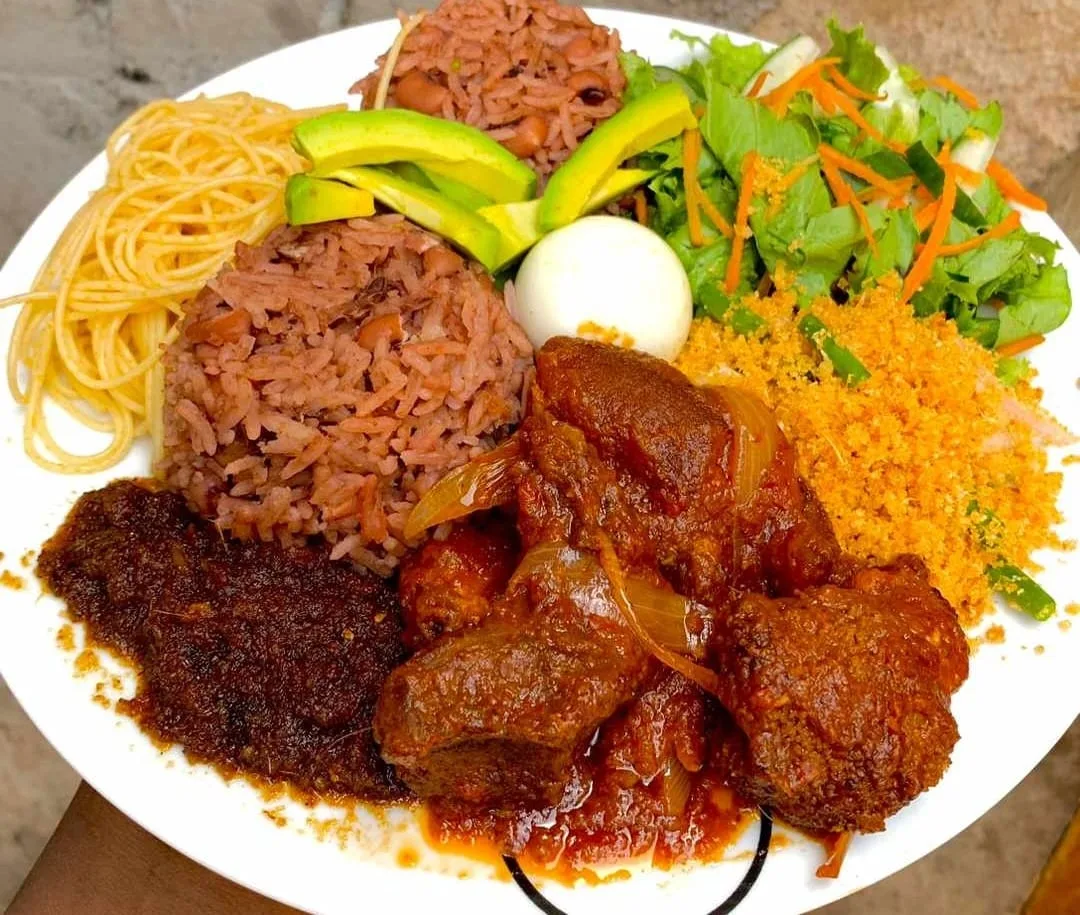
How a Ghanaian meal is put together
Most Ghanaian meals are a starch, a soup or stew, a protein and pepper. The starch changes with the region and the hour: banku and kenkey on the coast, fufu almost everywhere, tuo zaafi in the north, rice in all its forms across the country. The soup might be light soup, groundnut, palm nut, kontomire made from cocoyam leaves, or okro. The protein is usually fish, chicken, goat, beef or egg.
In a chop bar you will be asked what you want and handed a bowl. You eat with your right hand if you are having fufu or banku, pinching off a ball, dipping it in the soup and swallowing without chewing much. Cutlery is fine in restaurants. Licking your fingers is normal.
The word chop just means food. Small chops are the fried snacks served at parties. If someone says they are going for chop, they are going to eat. Prices below are GHS ranges and they move, so confirm before you order, especially where there is no printed menu.
The dishes to order first
Waakye is the breakfast worth setting an alarm for. Rice and beans are cooked with sorghum leaves, which turn the dish a deep red-brown, and it is served with shito, boiled egg, gari, spaghetti, fried fish or beef, and pepper. Vendors sell out by early afternoon, so go before 11am. A generous plate is GHS 15 to GHS 40.
Jollof is the other staple. Ghanaian jollof is long-grain rice cooked in a tomato and pepper base, usually with chicken or beef and shito on the side. A good plate is GHS 30 to GHS 90. Banku with grilled tilapia is the meal people plan evenings around, at GHS 150 to GHS 350 at a serious tilapia spot.
Fufu comes with light soup or groundnut soup and is a chop bar staple at GHS 30 to GHS 90. Kenkey, fermented maize, is softer in the Fante version and drier in the Ga version, eaten with fried fish and pepper for GHS 15 to GHS 50. Red red is fried ripe plantain with bean stew at GHS 20 to GHS 50. In the north, order tuo zaafi with ayoyo or okro soup at GHS 25 to GHS 60, and try wagashi, the fried cheese sold around Wa.
- Ask for pepper on the side until you know your tolerance.
- Shito is a black pepper and fish condiment. It is hot, excellent and not vegetarian.
Street food and the night market
Street food is a full parallel restaurant scene and often the best value in the country. Mornings bring koko, a millet porridge, with koose or bofrot. Mid-morning is waakye and rice dishes. Afternoon is roasted maize, coconut and sugarcane. After 5pm the kelewele stands appear, along with chichinga, the spiced grilled skewers, and grilled fish.
The Osu night food market in Accra is the easiest introduction for a first-timer. From around 6pm the stalls fill with grilled fish, kebabs, fried rice and cold drinks. Go with small notes, expect to eat standing or on a plastic chair, and pick the stall with the longest local queue. Kaneshie and Tamale Central Market run the same pattern at different hours.
Food safety is mostly about turnover. Eat where the food is cooked hot in front of you and moves quickly. Avoid anything sitting lukewarm, and be cautious with cut fruit from a stall unless you see it prepared.
- Sachet water, called pure water, is GHS 1 to GHS 3.
- Carry hand sanitiser. You will often eat with your hands.
Chop bars, canteens and restaurants
A chop bar is a neighbourhood canteen, usually one room with benches and a short menu of whatever was cooked that day. They are the cheapest proper meal in the country, GHS 30 to GHS 80, and often the best. Look for a queue of local workers and a pot being emptied rather than kept warm.
A step up is the local restaurant, air-conditioned, with a printed menu and waiters. Mains are GHS 90 to GHS 200. Upmarket places charge GHS 200 to GHS 450, and the cooking might be Ghanaian, Lebanese, Chinese, Indian or West African. Accra has good versions of all of these. Hotel restaurants are the worst value in the country: expensive and timid with Ghanaian flavours.
Portions are large, so sharing a main and adding a side is normal. Where there are no prices on the wall, ask what a plate costs before you order, particularly for fish, which is often priced by size. Check the bill for a service charge, commonly ten per cent, with VAT sometimes on top.
- Breakfast in mid-range hotels is usually eggs, toast and fruit, not waakye.
Vegetarian, vegan and allergies
Ghanaian cooking uses fish, dried fish, shrimp powder and meat stock as flavour bases, often in dishes that look vegetable-based. Kontomire stew, for example, is cocoyam leaves cooked with fish or meat unless you ask otherwise. Say clearly that you want no fish, no meat, no shrimp and no stock, and repeat it at the kitchen rather than only at the table.
Safe choices include red red, fried plantain, gari and beans, jollof without meat, vegetable fried rice, salad in a reputable restaurant, and fruit. Groundnut soup can be made without meat in some kitchens if you ask early in the day. In Accra, Kumasi and Cape Coast you will find restaurants that understand vegetarian requests. In small towns, expect to explain.
For a peanut allergy, groundnut soup is the obvious danger, and groundnut oil appears in other dishes. For gluten, the risk is bread, pastries, spaghetti in waakye and some sausages rather than the starches. If your allergy is severe, carry a written card and eat where you can speak to the cook.
- No-meat requests are widely understood. The word vegetarian is understood in the cities.
- Buffet food that has been sitting out is a common source of a bad day. Skip it.
Drinks
Soft drinks are called minerals. Fanta, Sprite, Coke, Malta, Alvaro and Club come in bottles, usually GHS 8 to GHS 15. Sobolo is a deep red hibiscus drink sold cold from vendors, GHS 5 to GHS 15, and lamugin is a fiery ginger drink. Bottled water is GHS 3 to GHS 12 depending on where you buy it.
Beer is cheap by European standards. Star, Club, Gulder and Guinness Foreign Extra are brewed locally, and a bottle in a bar is GHS 15 to GHS 35. Guinness in Ghana is stronger and sweeter than the Irish draught version.
Palm wine is tapped from palm trees and sold fresh. It ferments within hours, so drink it the day it is tapped, from a seller with steady turnover. A calabash is GHS 10 to GHS 30. Akpeteshie is a distilled palm spirit, strong, sold in sachets and bottles. Buy it from a bar rather than a roadside seller, and go easy.
- Do not drink tap water. Ice in a reputable restaurant is usually fine.
Eating outside Accra
The coast around Cape Coast and Elmina eats Fante style: kenkey, fresh grilled fish, cassava chips and coconut. This is some of the best value seafood in the country, and a whole tilapia with kenkey at a chop bar costs a fraction of an Accra restaurant price.
Kumasi and the Ashanti region are fufu country, usually with light soup or groundnut soup, plus kelewele in the evenings and tatale, ripe plantain pancakes, when you find them.
The north is a different cuisine: tuo zaafi with ayoyo soup, rice dishes, beans and gari, grilled guinea fowl, and wagashi in the Upper West. The flavours are less palm-oil heavy and the pepper is often sharper. Around Ho in the Volta region, look for akple with okro soup and borborbor, a corn and cassava dish served at gatherings.
Wherever you are, ask what is good today, ask the price, and eat where Ghanaians are eating. Prices change with the season and with fuel, so confirm before you commit and carry small notes.
- Fish is freshest and cheapest on the coast, but not on a Monday when boats may not have gone out.
- Market food is cheapest in the morning, before the lunch rush clears the pots.