Kumasi is not Accra with fewer people
People plan Kumasi as a stop on the way to Mole or Cape Coast and give it a night. That is a mistake, because the city is the seat of the Ashanti kingdom and the difference between it and Accra is the whole reason to come. Accra is a port city that grew around trade and government. Kumasi is a royal capital that grew around a palace, and it still behaves like one.
Two days is the right amount. Three if you want Lake Bosomtwe without rushing. Fly if you can, because the road from Accra takes five hours on a good day and considerably longer in December.
Day one morning: Manhyia and the museum
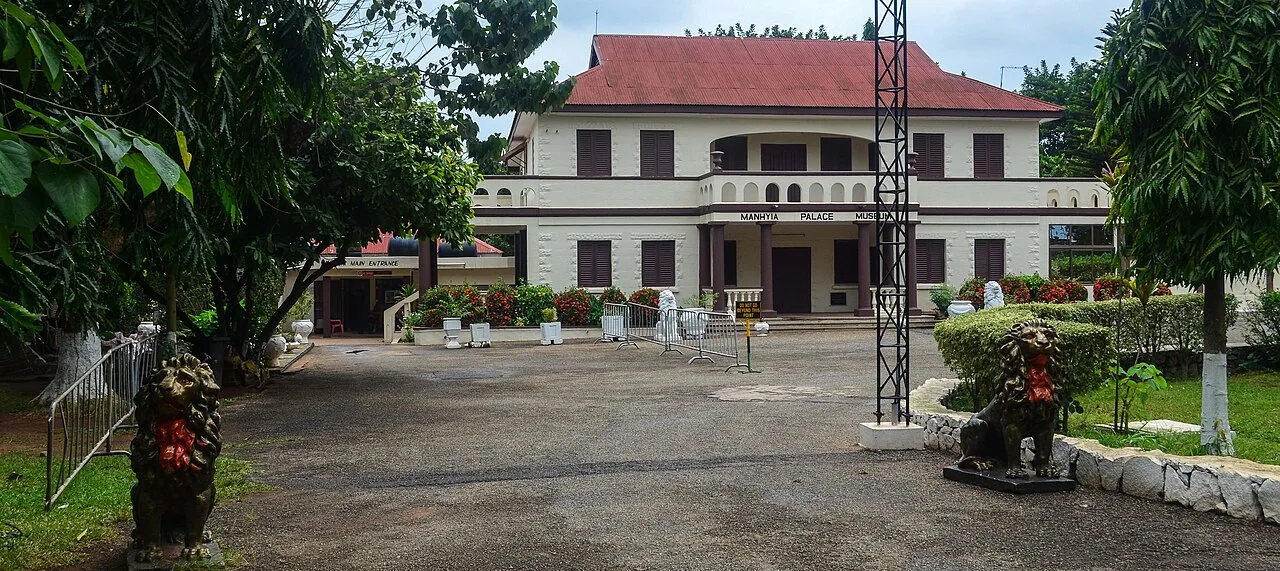
Start at Manhyia Palace Museum, the former residence of the Asantehene and now the museum of the kingdom. The collection is smaller than you might expect and the context is enormous: this is where the history of the Ashanti state is told by the institution that lived it, and the guides are often people whose families have been part of it.
Give it two hours, go in the morning while it is cool, and read about the Yaa Asantewaa War and the exile of Prempeh I before you arrive. Ten minutes of reading beforehand turns a room of objects into a story. From there, the Okomfo Anokye Sword Site is a short drive and a fifteen-minute stop: the sword the founding priest is said to have driven into the ground, which nobody has been able to pull out.
- Manhyia Palace Museum: allow two hours.
- Okomfo Anokye Sword Site: a short stop nearby, worth combining.
Day one afternoon: Kejetia and the workshops
Kejetia Market is the largest in West Africa by most counts and it is not a sightseeing attraction, it is a working market with tens of thousands of traders. Go with a guide or a local friend the first time, keep your bag in front of you, and go in the morning rather than the afternoon, because the heat inside builds through the day.
If you only have an hour, pick one section and do it properly rather than trying to cross the whole thing. The fabric and bead sections are the ones most visitors come for. Afterwards, the Kumasi Cultural Centre holds craft workshops and the Prempeh II Jubilee Museum, and it is the easiest place in the city to buy something made locally without haggling in a market aisle.
Day two morning: the kente and adinkra villages
The villages north and east of Kumasi are the reason to keep a half day free. Bonwire is where kente is woven, and you can watch the looms and buy directly. Ntonso does adinkra, the stamped symbols, and you can make a cloth yourself in about an hour. Ahwiaa carves stools and masks.
The three are close enough to do in one morning with a driver, and the roads between them are good. Buy from the workshops rather than a city shop and the price is lower and the money goes to the people who made the thing. Bring cash in small notes, because none of them take cards.
- Bonwire: kente weaving, and the best place to buy it.
- Ntonso: adinkra stamping, with a hands-on session if you want one.
- Ahwiaa: woodcarving, stools and masks.
Day two afternoon: pick one of two
You have a choice and it depends on what you came for. Lake Bosomtwe is a meteorite crater lake about an hour from the city, ringed by hills and villages, and it is the calmest place in the region. Go for a long lunch by the water and a swim, and stay the night if you can, because the lake at sunrise is the point of it.
The other option is Bobiri Forest and Butterfly Sanctuary on the Accra road, which CSIR-FORIG manages and which is the only butterfly sanctuary in West Africa, with more than 400 species recorded. It is a proper forest walk rather than a wildlife park, so go for the trees, the canopy tower and the butterflies, not for large animals. Either one fills an afternoon comfortably.
If you have a third day
The Yaa Asantewaa Museum at Ejisu is a short drive out of the city on the Accra road and makes an easy stop as you leave. It is the restored home of the queen mother who led the 1900 resistance, and it is small, quiet and worth the detour if you have read anything about her.
Suame Magazine is the other thing worth a morning, and almost no visitor sees it: tens of thousands of artisans repairing and fabricating vehicles and machinery across a district that works as a self-taught industrial city. It is not an attraction and you should not wander it alone. Go with a guide, ask before photographing anyone, and it will be the thing you talk about afterwards.
Getting there, and what it costs
Flights from Accra take about 45 minutes and are worth it. The road is around 250 km and takes five hours in a private car, longer by bus, and considerably longer in December. STC and VIP buses run through the day from Accra and are cheap and reliable.
On the ground, a driver for a full day in Kumasi runs roughly GHS 500 to GHS 900 and is the sensible way to do the villages, which are not on a tro-tro route you want to learn. Entry to Manhyia and the museums is modest, generally under GHS 100 for foreign visitors. Prices on this site are estimates and they move, so confirm before you commit.