Ride-hailing: Uber, Bolt and Yango
All three operate in Accra and most major cities, with app-priced fares paid in cash or by card. Bolt is often the cheapest, Uber has the largest fleet, and Yango is competitive and popular locally. Fares surge in the rain and at peak times, and drivers often call to confirm your exact pickup point because street addresses are loose. Prices move with fuel costs and inflation, so use the live quote in the app rather than any figure you read elsewhere.
- Set your pickup pin precisely; use a landmark or named junction, not just a street address.
- Screenshot the driver and plate number and share your trip with someone.
Street taxis
Traditional taxis rarely use meters; you negotiate the fare before you get in. Many also run shared routes, picking up other passengers along the way, which is normal but confusing for visitors. Always confirm whether the price is for the whole car or per person, and whether it is one-way. Taxis remain useful where apps are thin, late at night, or when you need a driver to wait for you.
- Agree the fare before opening the door, and have your destination ready in Twi or Ga if you can.
- If the price feels absurd, walk to the next taxi or open the app. There is almost always another car.
Tro-tros and the mate system
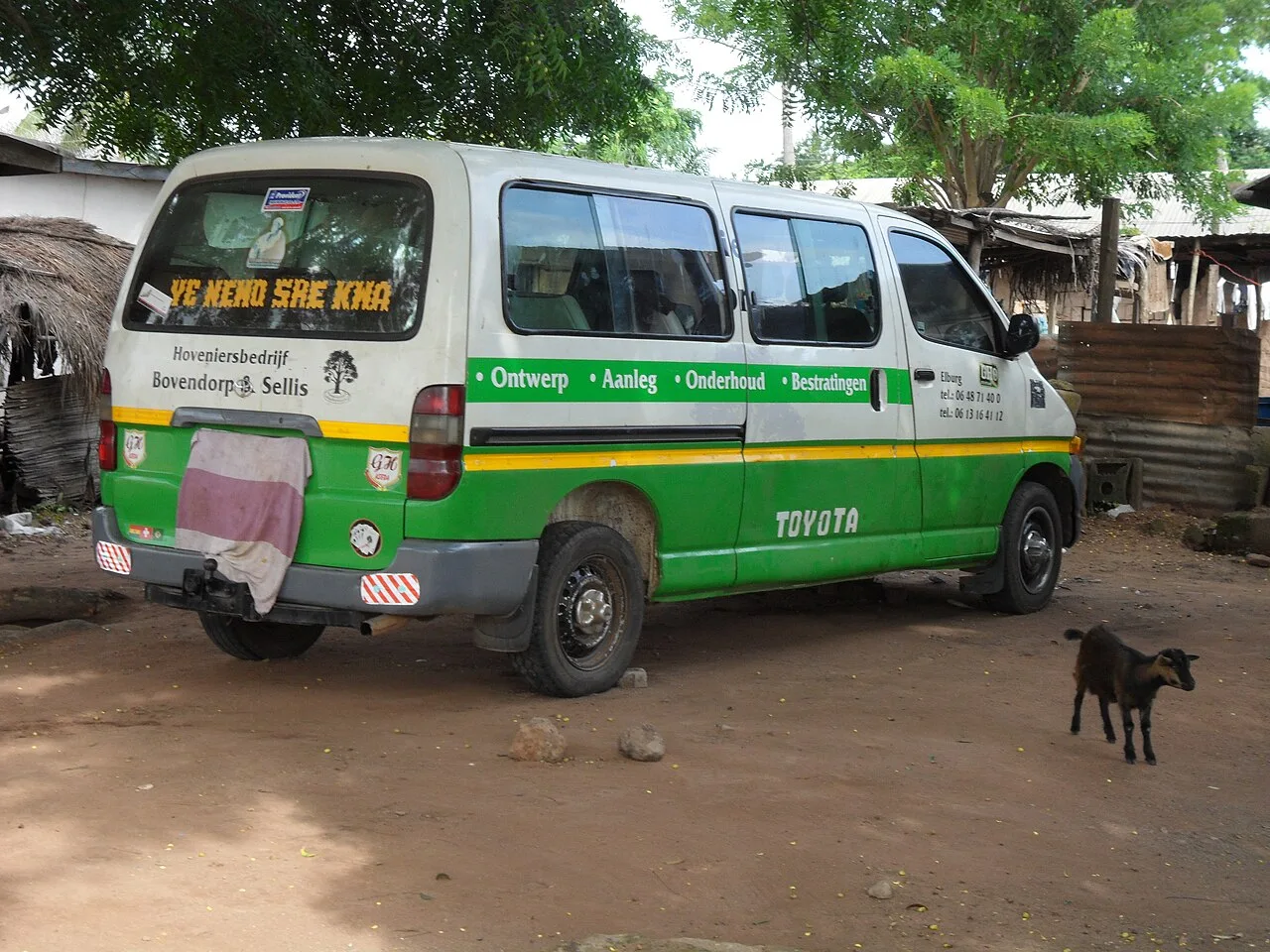
Tro-tros are minibuses running fixed routes and are the cheapest way to move. The mate leans out and shouts the destination, you flag it down, jump in and pay the mate once moving, usually in coins and small notes. Routes radiate from stations like Circle, Kaneshie and Tema Station, and you often change once or twice to reach your destination. They are crowded, occasionally chaotic and generally safe, though pickpocketing does happen.
- Ask a local or your hotel to write down your route and the tro-tro station name before you set out.
- Keep your bag on your lap and your phone out of sight.
- Okada motorbike taxis are widely used but have a patchy legal status and a higher accident risk, think carefully before using them.
Traffic, timing and walking
Accra traffic is serious. Expect 6-9am and 4-8pm to crawl, and rain to make everything worse, so distances that look short on a map can take an hour. Walking is realistic within some neighbourhoods such as Osu, Labone and Cantonments, but not between them, and pavements are inconsistent and often obstructed.
- Group your day by neighbourhood instead of criss-crossing the city.
- Build a 50 percent buffer into any appointment that involves crossing Accra.
- For the airport corridor, use the coastal road or the Tema motorway rather than cutting through the centre.
Rules, fees and opening hours change. Confirm anything that matters before you rely on it.